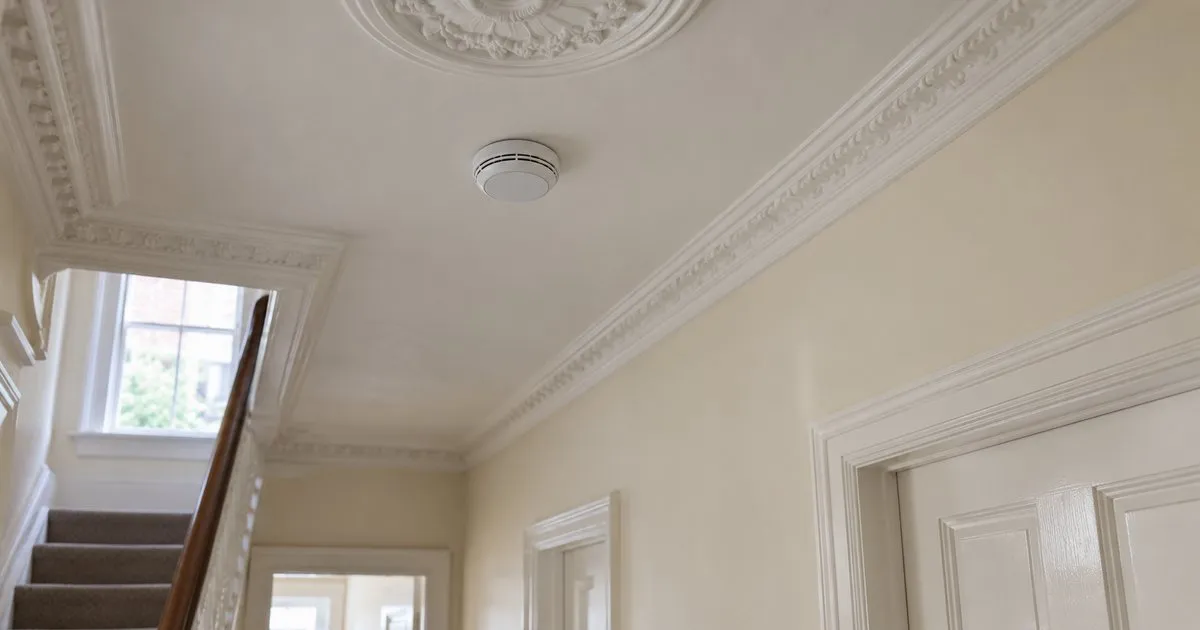
Wireless fire alarms are one of the things landlords ask us about most, usually right after they’ve seen a quote for a wired system with the words “chasing walls” and “lifting floorboards” in it. The short answer is yes, a wireless system can be fully compliant in an HMO. The longer answer is that “wireless” covers three very different things, and only two of them belong in a licensed HMO.
”Wireless” means three different things
1. Radio-interlinked mains alarms (Grade D1). Each smoke or heat alarm is still powered from the mains at its own position, with a sealed back-up battery, but the interlink between alarms is a radio signal instead of a cable running from room to room. When one alarm detects a fire, they all sound. Under BS 5839-6 this is still a Grade D1 system. The radio just replaces the interconnecting cable.
2. Wireless panel systems (Grade A). A full fire alarm system with a control panel, detectors, manual call points and sounders, where the devices talk to the panel by radio instead of over a wired loop. Each device runs on its own long-life batteries. These are designed and installed to BS 5839-1, with the radio components certified to BS EN 54-25.
3. Standalone battery alarms (Grade F). Battery smoke alarms, sometimes radio-linked to each other, with no mains supply at all. These are what DIY shops sell as “wireless”. They meet the bare legal minimum for some rented homes, but they are almost never accepted as the main provision in a licensed HMO.
When a landlord tells us they’ve “already got wireless alarms”, it’s usually the third kind. When a council accepts a wireless system, it’s the first or second.
Are wireless fire alarms compliant in an HMO?
Yes, as long as the system is the right grade and category for the building. Nothing in BS 5839 says the links have to be wires. What matters is that the system meets the grade your property needs, is installed and commissioned properly, and comes with the certificates to prove it.
So if your fire risk assessment and licence conditions call for interlinked Grade D1 alarms, a radio-interlinked Grade D1 system meets that. If the building needs Grade A, a wireless Grade A system with a panel meets that too. What going wireless can’t do is turn a battery alarm into a higher grade. If you’re not sure which grade your property needs, start with our guide to HMO fire alarm grades.
Licence conditions vary between councils, and some spell out the system in detail, so check yours before you commit.
Where wireless makes the most sense
- Occupied HMOs. A wired system means cable runs through every room and the communal areas. A wireless install is far quicker and much less disruptive, so tenants can stay put and you don’t lose rent while the work is done.
- Period and listed properties. Original cornicing, plaster and decorative finishes don’t take kindly to cabling, and listed building consent can rule chasing out entirely.
- Recently refurbished properties. Nobody wants to cut into new plaster to add an alarm system.
- Extensions, outbuildings and loft conversions. On many panels, a radio expander can bring an awkward part of the building onto an existing wired system without running a new cable to it.
- Upgrades after a licence change. If the council asks for extra detection, adding radio devices to a compatible system is often quicker than extending the wiring.
The trade-offs
Wireless isn’t automatically the better choice. Go in knowing:
- Batteries need replacing. Devices on a wireless Grade A system run on batteries that need changing every few years, depending on the system. That’s an ongoing cost a wired system doesn’t have. The panel warns you well before a battery runs flat, but someone still has to change it.
- The equipment costs more. Wireless devices cost more each than their wired equivalents. You usually save on labour and making good afterwards, so the total is often closer than people expect, but it isn’t always cheaper.
- Some buildings fight the signal. Thick masonry, concrete floors, steelwork and foil-backed insulation can all weaken radio signals. A proper installer runs a signal survey before quoting and adds repeaters where they’re needed. If someone quotes for a wireless system without checking the signal on site, be wary.
- Grade D radio alarms still need power. Radio replaces the cable between alarms, not the power to them. Each alarm still needs a mains supply, though it can usually come from the nearest lighting circuit rather than a dedicated run across the building.
Testing is the same either way
Going wireless doesn’t change the testing regime. You still need the weekly test with a logbook entry, and the periodic service by an engineer: at least every six months for a Grade A system, and at least annually for Grade D alarms. Here’s the full breakdown of HMO fire alarm testing.
A wireless panel also reports low batteries and lost signals as faults, so problems show up at the weekly test instead of waiting until the day the alarm is needed.
What to ask a wireless fire alarm installer
- Will you do a signal survey before quoting?
- What grade and category are you installing, and why? If they can’t answer in BS 5839 terms, look elsewhere.
- Are the radio devices certified? For a Grade A system, look for BS EN 54-25.
- How long do the device batteries last, and what does replacing them cost?
- Will I get a commissioning certificate? You’ll be asked for it at your licensing inspection.
- Who can service it afterwards? Some wireless systems need the manufacturer’s own tools to program and service, so check that more than one firm can look after yours.
Wireless fire alarm installation in Hounslow and West London
We install wired, wireless and hybrid fire alarm systems in HMOs and rental properties, from radio-interlinked Grade D1 alarms in shared houses to wireless Grade A panel systems in larger conversions. We survey the building first, tell you straight whether wireless suits it, and leave you with the commissioning certificate and a logbook. We cover Hounslow, Feltham, Isleworth, Brentford, Chiswick, Richmond, Twickenham and the wider West London area.
Request a quote, or read more about our wireless fire alarm installation and fire alarm installation and servicing.